Beginner's Guide
Diplomacy
Eleven other kindreds remember everything you do. Diplomacy in Krestfell is not a menu of treaties — it is a ledger of graces and grievances, and a table that turns on whoever is winning.
The ledger
Every pair of nations carries a running relationship score built from graces (gifts, common cause, old friendships) and grievances (trespass, attacks, broken oaths). The AI acts on this ledger: a kindred with a deep grievance against you will find its way to your border eventually. You can read every civ's disposition by tapping their capital and browsing the civ panel.
Note that lore and history matter here: kindreds come to the table with old bonds and old wounds — some pairs are natural allies, some natural foes.
The playable moves
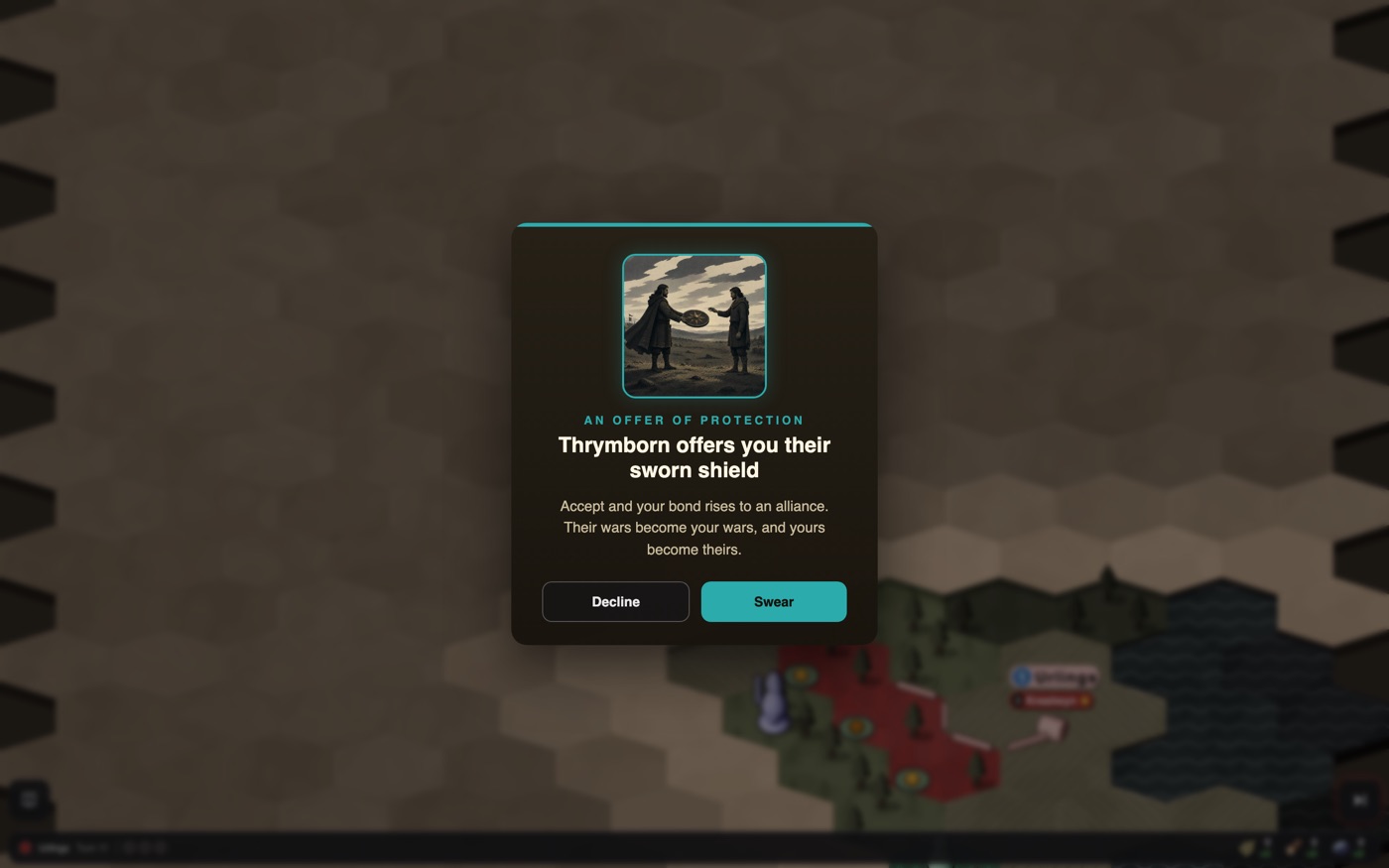
- Sworn Shield — propose a pact of mutual protection. Accepting forms a team: trespass between members is waived, and an attack on one member is a grievance against all. One team per civ.
- Call for Unity — a public call to league against a named target. Any teamless kindred may answer while the call stands.
- Answer the Call — join a league someone else raised.
- Break the Shield — leave your team. Cheap and public: a small grievance with your ex-partners, and everyone saw you do it.
- Bribe — spend to redirect a war someone else is fighting.
- Name the Danger — in a league of three or more, formally accuse a teammate of growing too dangerous. The others vote. Win the vote and the league splits against the accused; lose it and you are cast out as a false accuser.
Dread: why the leader gets dogpiled
Every kindred carries a public dread score — how frightening they look, dominated by their star count, army, and footprint. High dread bends the whole table's behavior: underdogs converge on the leader, calls for unity name them, and pacts form in their shadow.
This cuts both ways. When you lead, expect the knives; when you don't, the dread leader is your natural ally-maker.
No pact is forever
Teams have no shared victory — the star math guarantees only one winner — so every league is temporary by design:
- An unjustified league (its great enemy fallen or fading) accumulates tension and rots: members pick up recurring grievances with each other until it cracks.
- A teammate within reach of winning stops being a teammate; the AI will absolutely betray a partner on the brink of victory, and violence against your own teammate is oathbreak — ejection and a broadcast grievance with every living kindred.
Treat your shields accordingly: they are instruments, not friendships. The strategy chapter on diplomacy covers how to play the table deliberately.